When we hear the word �rare,� it is easy to imagine something that affects only a handful of people.
But when it comes to rare diseases, the picture is much bigger.
There are thousands of different rare diseases. Each individual condition may affect a relatively small number of people, but together, rare diseases affect millions of individuals and families around the world.
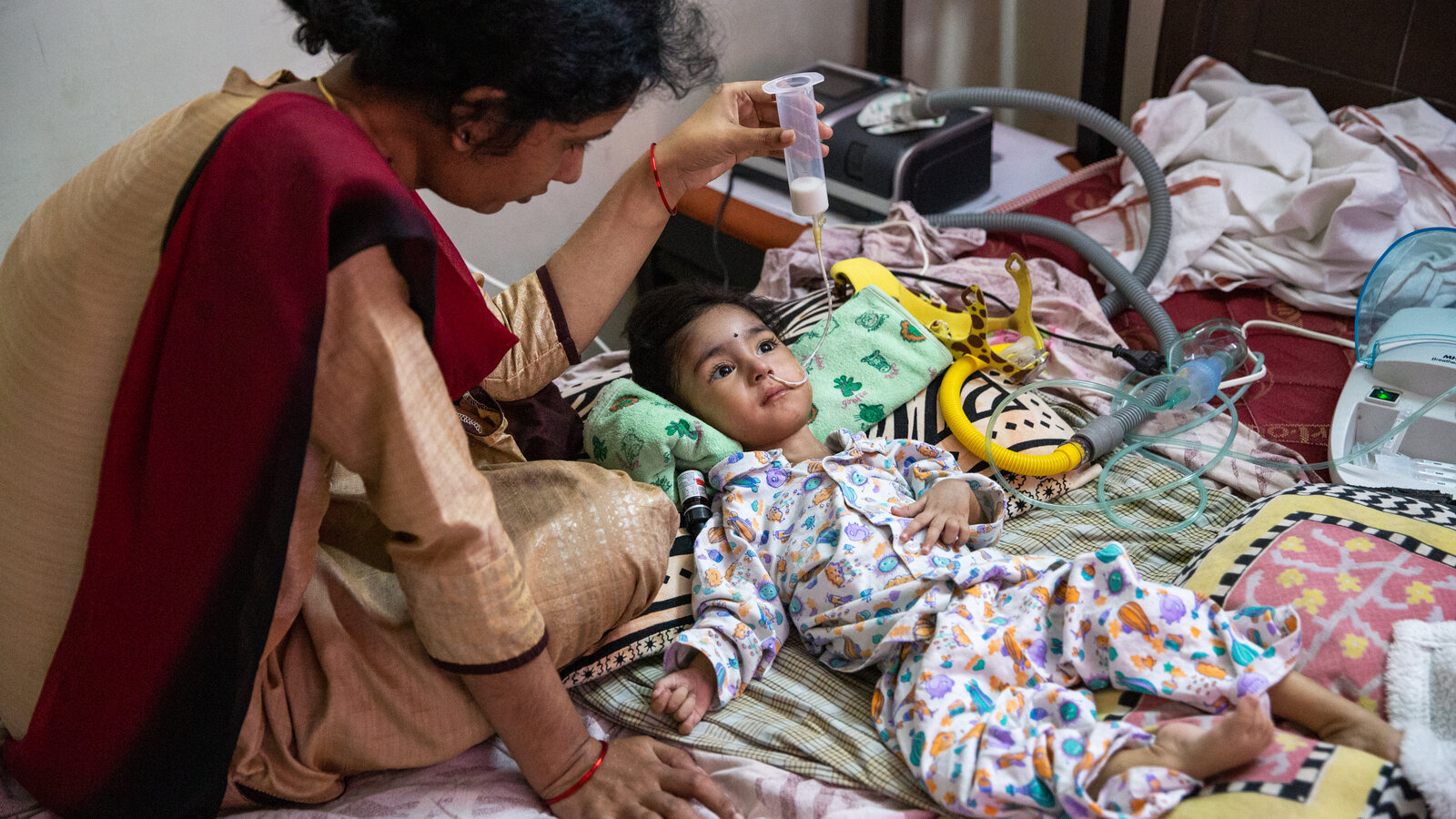
For many families, living with a rare disease can mean much more than managing a medical condition. It can involve a long search for a diagnosis, repeated consultations, limited treatment options, difficulty finding specialists, financial pressure and uncertainty about the future.
India is also working to strengthen its response to rare diseases through national policy, specialized centres, research and patient-support initiatives.
So, what exactly is a rare disease�and what does the rare disease landscape look like in India?
What is a rare disease?
There is no single universal definition of a rare disease.
Different countries use different criteria, usually based on how frequently a condition occurs within a population.
The World Health Organization (WHO) notes that a rare disease is often described as a condition affecting fewer than 1 in 2,000 people, while also recognizing that definitions can vary. WHO estimates that there are more than 7,000 known rare diseases, affecting more than 300 million people globally. Around 70% of these conditions begin in childhood.
India has taken a somewhat different approach.
The National Policy for Rare Diseases, 2021 states that there is no universally accepted definition and that India has limitations in the epidemiological data needed to establish a prevalence-based threshold. Until better data are available, the policy identifies groups of rare disorders based on expert clinical categorization.
This is important because the word �rare� does not have exactly the same meaning everywhere.
Rare does not mean unimportant
A common misconception is that because a disease is rare, it affects very few people overall.
The reality is different.
There are thousands of rare diseases, and collectively they affect a substantial number of people.
The WHO's 2025 resolution on rare diseases recognized rare diseases as a global health priority and highlighted their significant physical, emotional and financial impact on individuals and families.
Behind every rare disease statistic is a person.
A child who needs repeated medical care.
A young adult trying to understand an unexplained condition.
A parent searching for answers.
A caregiver balancing appointments, treatment and everyday responsibilities.
That is why rare disease awareness matters.
What causes rare diseases?
Rare diseases are not all caused by the same thing.
Many rare diseases have a genetic basis, but rare diseases can also include conditions caused by other factors.
Genetic conditions may result from changes in a single gene, multiple genes, chromosomes or other parts of the genome.
Some genetic changes may be inherited from parents. Others can arise as new changes and may occur even when there is no previous known family history.
Rare diseases can also include certain rare cancers, infectious diseases and other uncommon conditions.
The exact cause is known for some rare diseases, while for others, researchers are still trying to understand the underlying biology.
This is one reason rare disease research is so important.
Are all rare diseases present from birth?
No.
Some rare diseases are present from birth or become apparent during infancy or childhood.
Others may not become noticeable until adolescence or adulthood.
WHO notes that around 70% of rare diseases begin in childhood, but this also means that a significant proportion can have an onset later in life.
A person can therefore live for years before a rare disease becomes apparent or receives a diagnosis.
This is one reason why rare diseases should not be thought of only as childhood conditions.
What kinds of symptoms can rare diseases cause?
There is no single set of symptoms that identifies a rare disease.
Depending on the condition, symptoms can involve almost any part of the body.
A patient may experience:
Developmental or learning difficulties
Neurological symptoms
Muscle weakness
Movement difficulties
Seizures
Problems affecting vision or hearing
Heart or lung problems
Digestive symptoms
Bone or skeletal abnormalities
Problems with metabolism
Immune-system abnormalities
Recurrent or unusual infections
Some rare diseases affect only one body system.
Others are multisystem conditions, meaning they can affect several organs or systems at the same time. WHO describes rare diseases as often being complex and multisystemic, with some conditions being chronic or progressive.
Because many of these symptoms can also occur in common conditions, identifying a rare disease can be challenging.
Why can rare diseases be difficult to diagnose?
One of the biggest challenges is simply recognizing the pattern.
A doctor may encounter thousands of patients with common conditions but only a small number with a particular rare disease.
A patient's symptoms may also change over time.
Different symptoms may be assessed by different specialists, making it difficult to immediately see how they are connected.
In some cases, genetic testing or other specialized investigations may be needed.
India's National Policy for Rare Diseases specifically identifies lack of awareness, difficulties in diagnosis and limited diagnostic facilities as important challenges.
As a result, some patients and families experience what is often called a �diagnostic odyssey��a long journey through consultations and investigations before the underlying condition is identified.
What happens after diagnosis?
Receiving a diagnosis can be an important turning point.
It may help explain previously unexplained symptoms and allow healthcare professionals to develop a more appropriate care plan.
Depending on the disease, care may include:
Disease-specific treatment, where available
Medicines to manage symptoms
Monitoring for possible complications
Physiotherapy or rehabilitation
Nutritional support
Specialist consultations
Genetic counselling
Psychological or social support
Not every patient will need all of these services.
The appropriate care depends on the specific condition and the individual patient.
A diagnosis also does not automatically mean that a cure or disease-specific treatment exists.
For some rare diseases, treatment options remain limited, and supportive care may be an important part of management.
What is the rare disease situation in India?
India faces unique challenges in addressing rare diseases because of its large and diverse population, differences in healthcare access, limited epidemiological data and the complexity of many rare conditions.
The Government of India introduced the National Policy for Rare Diseases (NPRD) in 2021 to provide a framework for addressing rare diseases, including diagnosis, treatment, research and development of specialized healthcare infrastructure.
The policy recognizes different categories of rare diseases and outlines approaches for improving care.
It also provides for the development and strengthening of Centres of Excellence, which are intended to support diagnosis and management of rare diseases.
The policy reflects an important reality:
Rare disease care cannot depend on medicines alone.
It requires diagnostic expertise, trained healthcare professionals, research, specialized infrastructure, supportive care and systems that help patients navigate their healthcare journey.
What are Centres of Excellence?
Centres of Excellence are specialized healthcare institutions identified under India's rare disease framework.
Their role includes strengthening the diagnosis and treatment of rare diseases and providing specialized expertise.
For patients and caregivers, access to such expertise can be important because rare diseases may require input from multiple medical specialties.
However, availability and access can vary, and patients should discuss appropriate referral options with their healthcare professionals.
What about treatment for rare diseases?
Treatment depends entirely on the specific condition.
Some rare diseases have established therapies.
These may include medicines that replace a missing enzyme or other biological substance, treatments targeting a particular disease pathway, gene-based therapies for certain conditions, or other disease-specific approaches.
Other rare diseases may have no approved disease-specific treatment.
In such cases, healthcare professionals may focus on managing symptoms, preventing complications, rehabilitation and maintaining quality of life.
The Government of India's rare disease portal also highlights the challenge of treatment affordability and has been established to facilitate voluntary donations toward treatment for eligible patients through treating institutions.
However, patients should not assume that every medicine described online as a �rare disease treatment� is approved, appropriate or accessible in India.
Treatment decisions should always be made with the patient's healthcare team.
Why are rare disease medicines sometimes so expensive?
Developing a medicine for a rare disease can be particularly challenging.
The number of potential patients may be small, research populations can be limited, and the scientific understanding of a condition may be incomplete.
Some treatments also involve complex manufacturing or specialized administration.
These factors can contribute to significant development and treatment costs.
However, the issue is more complicated than simply asking why a medicine is expensive.
Patients and policymakers also need to consider how treatments can become accessible and sustainable for the people who need them.
This is why rare disease policy, healthcare financing, patient assistance programmes and advocacy are important parts of the wider discussion.
Why is genetic testing important in rare diseases?
Because many rare diseases have a genetic basis, genetic testing can play an important role in some diagnostic journeys.
Depending on the suspected condition, doctors may consider targeted genetic testing, single-gene testing, gene panels, whole-exome sequencing or whole-genome sequencing.
The appropriate test depends on the clinical situation.
Genetic testing can sometimes help confirm a diagnosis, identify the underlying genetic cause or provide information relevant to family members.
But it is important to remember:
There is no single genetic test that can diagnose every rare disease.
A genetic test should be interpreted alongside the patient's symptoms, medical history, examination and other investigations.
Genetic counselling may also be appropriate to help patients and families understand what testing could mean.
Why does research matter?
Rare diseases often have a limited evidence base compared with more common conditions.
Researchers need to understand:
What causes the disease
How the disease progresses
Which symptoms are most important
Which treatments may work
How treatments should be evaluated
What outcomes matter most to patients
Patients and caregivers can play an important role in research through appropriate participation in clinical studies, registries, surveys and natural-history studies.
The information generated through research can help improve future diagnosis and treatment.
The role of patients and caregivers
Patients are not simply people receiving healthcare.
Their experiences provide valuable information about what living with a rare disease actually means.
Patients and caregivers can contribute by:
Sharing experiences when they are comfortable doing so
Participating in research where appropriate
Supporting awareness initiatives
Asking informed questions
Keeping accurate medical records
Connecting with reliable patient organizations
Helping other families find trustworthy information
Patient advocacy can also help highlight gaps in diagnosis, treatment access, research and support.
A collective patient voice can help healthcare professionals, researchers and policymakers better understand real-world challenges.
What can families do if they suspect a rare disease?
Having unusual symptoms does not automatically mean that a person has a rare disease.
However, if symptoms remain unexplained or a condition is difficult to diagnose, families can take some practical steps.
Keep medical records organized.
Maintain copies of important reports, prescriptions, investigations and specialist consultations.
Create a symptom history.
Record when significant symptoms began and how they changed over time.
Share relevant family history.
Tell the healthcare team about important medical conditions affecting close relatives.
Ask questions.
If a diagnosis remains unclear, ask the treating doctor what possibilities are being considered and whether specialist evaluation may be appropriate.
Use reliable sources.
Government health agencies, recognized medical institutions and established patient organizations are generally better sources than unverified social media posts.
Most importantly, avoid trying to self-diagnose based solely on internet searches.
The Indian rare disease landscape is changing
India still faces substantial challenges in rare disease care.
But there has also been meaningful progress.
There is now a national policy framework, specialized Centres of Excellence, a government rare disease portal, increasing research activity and growing patient advocacy.
The Government's rare disease portal is also intended to facilitate voluntary donations for treatment through registered treating institutions, reflecting the reality that treatment affordability remains a significant challenge.
Globally, rare diseases are also receiving greater attention. In 2025, the World Health Assembly adopted its first resolution specifically addressing rare diseases as a global health priority, calling for stronger diagnosis, care, research, innovation and access to affordable treatments.
These developments matter because progress in rare diseases depends on cooperation across many areas�not just medicine.
Rare does not mean forgotten
A rare disease may affect one person in a community.
Another may affect thousands.
But every diagnosis represents a person whose health, education, work, family life and future may be affected.
The word �rare� describes how frequently a condition occurs. It should never describe how much a patient's life matters.
Understanding rare diseases is the first step toward recognizing them.
Recognizing them can support earlier diagnosis.
Diagnosis can help guide appropriate care.
And patient voices can help drive better research, policies and access.
At Healing Wings Foundation, we believe that awareness is not simply about knowing the names of rare diseases. It is about understanding the people and families behind them�and working towards a healthcare environment where rarity does not become a barrier to being heard, diagnosed, supported or cared for.
Because rare diseases may be uncommon individually, but no patient should ever feel alone in the journey.
Medical Disclaimer
This article is intended for general educational and awareness purposes only. It does not constitute medical advice, diagnosis or treatment and should not be used as a substitute for consultation with a qualified healthcare professional.
Rare diseases are a diverse group of conditions and can differ significantly in their causes, symptoms, diagnosis, treatment and prognosis. The presence of an unusual or persistent symptom does not necessarily indicate a rare disease. Patients and caregivers should consult an appropriately qualified healthcare professional for evaluation and disease-specific guidance.
Information about rare diseases, government programmes, treatment options and healthcare policies can change over time. Healing Wings Foundation makes reasonable efforts to provide information from reliable sources, but readers should verify current information through appropriate healthcare professionals and official government or regulatory sources.