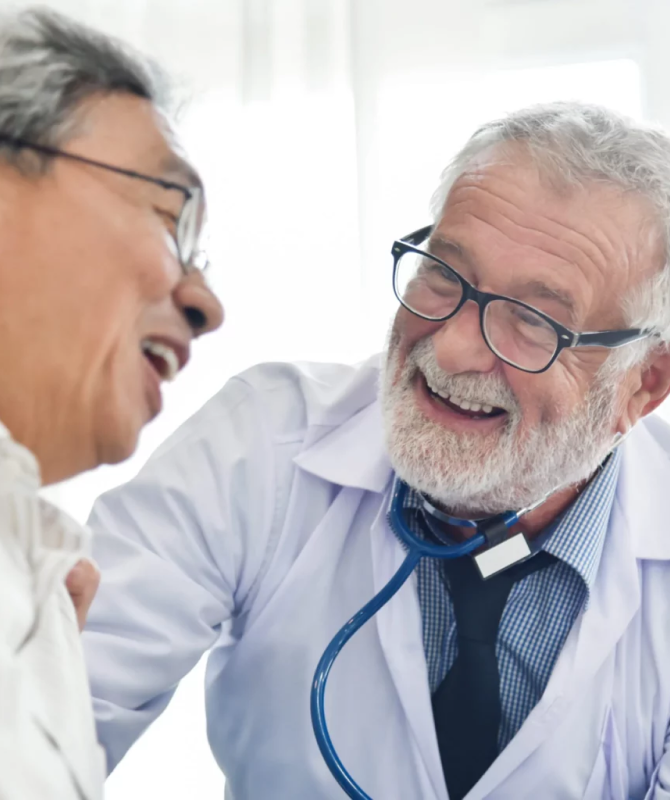
For many people living with rare and genetic disorders, the journey to a diagnosis can be long.
Every delay can mean another unanswered question for a patient and their family.
At Healing Wings Foundation, we believe that recognising the possibility of a rare or genetic disorder earlier can be an important step towards the right diagnostic pathway.
Our work in Early Diagnosis focuses on strengthening the journey from identification and screening to appropriate diagnostic evaluation and specialist support.
Because the earlier we recognise a possibility, the sooner we can begin looking for answers.
The Journey Often Begins Before the Diagnosis
A patient may first present with signs or symptoms that do not immediately point towards a rare or genetic condition. Recognising these possibilities can require:
Our aim is to support stronger connections across these stages.
From Recognition to the Right Pathway
Support initiatives that can help identify individuals who may require further evaluation for rare or genetic disorders.
Explore structured screening approaches that can help identify potential cases within communities and healthcare settings. HWF's Care for Rare programme includes working with State Governments on mass screening and patient identification programmes.
Support access to appropriate diagnostic resources, including genetic testing and genome sequencing, where relevant. Care for Rare includes initiatives around subsidised genetic testing and genome sequencing to support diagnosis and patient identification.
Diagnosis does not happen in isolation. We seek to strengthen connections between patients, genetic specialists, healthcare institutions and Centres of Excellence.
Once a potential condition is identified, patients need a pathway forward. Our broader patient-support and advocacy work aims to help connect identified patients with appropriate healthcare and access pathways.
Taking Diagnosis Beyond the Hospital
Some patients may remain unidentified simply because they have never entered the right diagnostic pathway. HWF is exploring mass screening approaches in collaboration with government stakeholders to support the identification of individuals who may require further evaluation.
A proposal submitted to the Government of Kerala focuses on mass screening programmes for rare diseases through government district hospitals and medical colleges.
Bring the possibility of identification closer to where people live and receive healthcare.
When the Answer Lies in the Details
For some rare and genetic disorders, reaching a diagnosis may require specialised genetic evaluation.
Through Care for Rare, HWF is exploring pathways to facilitate access to subsidised genetic testing and genome sequencing for identified patients.
Patient Identification → Testing → Diagnosis → Specialist Care
Connecting Expertise Beyond Geography
Specialist genetic expertise may not always be available close to where a patient lives.
HWF's Care for Rare programme includes the development of tele-genetic clinics, envisioned as spokes connected with Centres of Excellence. This approach aims to extend access to specialist genetic expertise through a connected healthcare model.
Where distance should not become a barrier to finding the right diagnostic pathway.
Exploring New Ways to Recognise Genetic Disorders
HWF is also exploring the development of an AI-powered genetic diagnosis platform focused on analysing facial phenotypic traits associated with genetic disorders.
The proposed platform would explore facial phenotype analysis, genetic database integration, next-generation phenotyping and clinical data integration to support healthcare professionals in recognising potential genetic disorders.
From a Face to a Possibility
The intention is not to replace clinical diagnosis. Rather, the proposed technology aims to explore whether additional insights from facial and clinical characteristics could support earlier recognition and more informed diagnostic pathways.
Building a diverse and well-annotated dataset of genetic syndromes and corresponding facial phenotypes.
Developing deep-learning models for facial phenotype detection and syndrome matching.
Exploring integration of clinical information and next-generation phenotyping.
Working with geneticists to test and validate the platform against real-world cases.
These stages form part of the proposed development roadmap.
No Patient Finds an Answer Alone
Building stronger diagnostic pathways requires many parts of the healthcare ecosystem to work together. We seek to collaborate with:
Understanding lived experiences and unmet needs.
Strengthening clinical recognition and referral pathways.
Supporting specialist evaluation and validation.
Building access to appropriate testing.
Connecting patients with specialist expertise.
Supporting screening and population-level initiatives.
Exploring innovative approaches to early identification.
"A future where a difficult diagnosis does not have to begin with years of uncertainty."
We envision a healthcare ecosystem where:
Early diagnosis is not simply about finding a name for a condition. It is about helping a patient move from “What is happening to me?” towards: “Now we know what we are looking for. What do we do next?”
At Healing Wings Foundation, we are working to strengthen that journey through screening, diagnostic access, specialist connectivity, research and innovation.
Because sometimes, the first step towards care is simply recognising that there may be an answer.