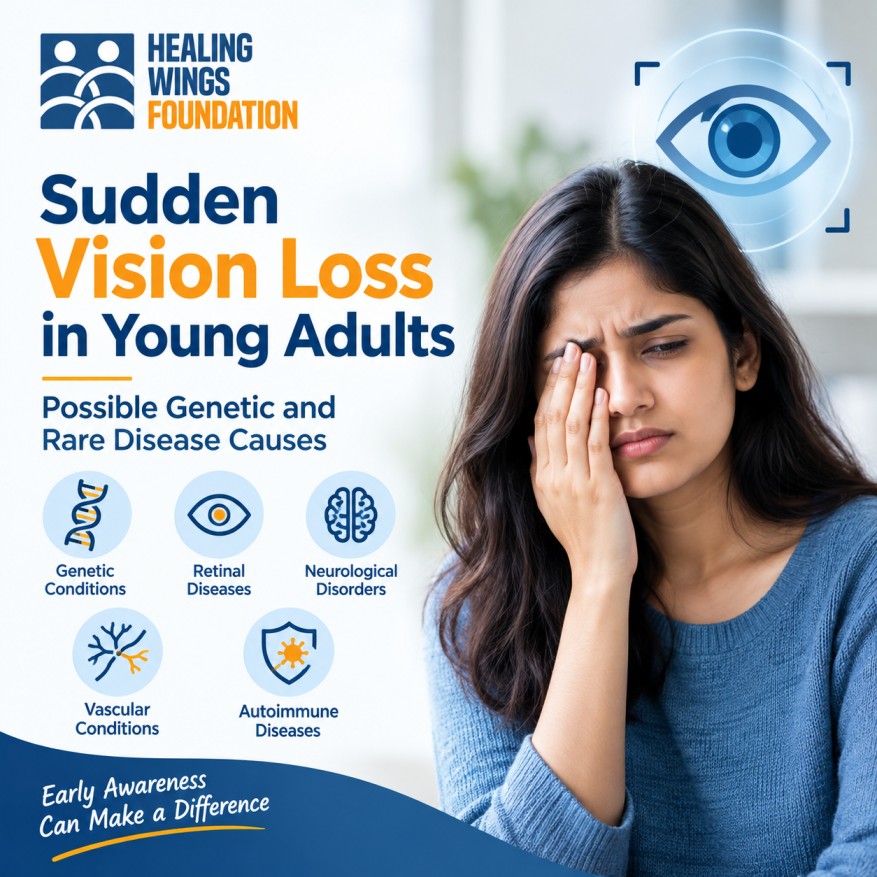
Losing vision suddenly is frightening at any age. In a young adult, it can feel even more confusing, because most people expect eye problems to come later in life. The truth is that sudden or fast-moving vision loss in a young person has a range of causes. Some are emergencies that need treatment within hours. Others are inherited or immune-related conditions that are rare and often missed at first.
This guide explains the main causes, the warning signs, how doctors find the answer, and why a quick, correct diagnosis matters.
First, the most important point: treat sudden vision loss as an emergency
Sudden vision loss is a symptom, not a single disease. Some causes can be treated only if the person is seen quickly, and delay can make the damage permanent. Please go to an eye hospital or emergency department the same day if you notice any of the following:
Vision that drops suddenly in one or both eyes, even if it improves later
A dark curtain or shadow across part of your vision
Sudden flashes of light or a shower of new floaters
A dark or blurred spot in the middle of your vision
Eye pain with redness, headache, nausea or vomiting
Vision loss with weakness, facial drooping, trouble speaking or loss of balance (call emergency services)
Painless vision loss can still be serious. Do not wait to see if it settles.
Common emergency causes doctors check first
Before thinking of a rare condition, doctors first rule out causes that need urgent treatment:
Retinal detachment: The retina pulls away from the back of the eye. It is usually painless, often with flashes, floaters or a curtain-like shadow, and it needs urgent surgery.
Retinal artery or vein blockage: Sometimes called an “eye stroke”, a blocked blood vessel causes sudden, painless vision loss. It needs urgent care and a check for stroke risk.
Acute angle-closure glaucoma: A sudden rise in eye pressure, usually with eye pain, redness, nausea and blurred vision.
Diabetic eye disease: Bleeding or swelling in the retina can reduce vision suddenly in people with diabetes, including young people.
Immune and nerve causes in young adults
Optic neuritis
Optic neuritis is inflammation of the optic nerve, the cable that carries images from the eye to the brain. It is the most common cause of sudden optic nerve problems in people younger than 50, and it is more common in young women.
Typical signs:
Blurred or dim vision in one eye over hours or days
Pain that gets worse when you move the eye
Colours that look faded or washed out
Optic neuritis can be linked to multiple sclerosis (MS), and two rarer immune conditions: neuromyelitis optica spectrum disorder (NMOSD) and MOG antibody-associated disease (MOGAD). Sometimes no cause is found. The underlying condition matters, because NMOSD in particular can cause severe, relapsing vision loss and needs different treatment from MS. Blood tests for specific antibodies and an MRI help to tell them apart.
Idiopathic intracranial hypertension
This condition causes raised pressure around the brain and swelling of the optic nerve (papilledema). It mainly affects young women and often causes daily headaches, double vision or brief greying-out of vision. If untreated, it can lead to permanent vision loss.
Genetic and rare disease causes
Leber hereditary optic neuropathy (LHON)
LHON is a rare inherited condition caused by changes in mitochondrial DNA, the DNA found in the cell’s energy factories. It usually affects young men in their teens, twenties or early thirties, although women and other ages can be affected.
What it looks like:
Painless loss of central vision in one eye
The second eye is usually affected weeks or months later
Colours look dull and a central blind spot develops
LHON is passed down through the mother’s side. Many people who carry the gene change never lose vision, so there may be no obvious family history. In the early stage, LHON can look like optic neuritis, which is one reason it is often missed. Genetic testing confirms the diagnosis. Treatment options are limited, so a neuro-ophthalmologist should guide care.
Stargardt disease
Stargardt disease is the most common inherited condition affecting the macula, the part of the retina that gives sharp central vision. Symptoms usually begin in childhood or the teenage years, but can appear later. It is usually gradual, although many people only notice it when reading or recognising faces becomes difficult. Vision that cannot be corrected with glasses is the main clue, and side vision is usually less affected.
Retinitis pigmentosa and other inherited retinal diseases
Retinitis pigmentosa is the most common inherited retinal disease. It typically starts with poor night vision and gradually narrows the side vision. Some forms occur together with hearing loss, as in Usher syndrome. These conditions progress slowly, but a young adult may suddenly notice the effect, for example when walking in the dark.
Many of these conditions are rare, and families often go through several doctors before getting an answer. Read more about why rare diseases are difficult to diagnose.
How doctors find the cause
Detailed history: When the loss began, whether one or both eyes are affected, pain, other symptoms, medicines, and family history of vision loss.
Eye examination: Vision and colour vision tests, pupil checks and a dilated retinal examination to look for tears, detachment, bleeding or blockages.
Retinal and nerve imaging: Scans such as optical coherence tomography (OCT) and visual field tests show how the retina and optic nerve are affected.
MRI and blood tests: Used when optic neuritis, MS, NMOSD or MOGAD is suspected.
Genetic testing: When an inherited condition is suspected, testing can confirm the diagnosis, explain the risk to relatives and show whether a person may qualify for treatment or research studies.
Our genetic testing guide for patients and families explains what these tests involve and what the results can mean.
Why a genetic diagnosis matters
It ends the search. A clear answer helps you stop repeating tests and plan ahead.
It guides treatment. Eye specialist guidelines describe genetic testing as an essential part of care for inherited retinal disease, and it decides eligibility for approved gene therapy. At present, such a therapy exists for one inherited retinal condition caused by changes in the RPE65 gene. Availability differs between countries, so ask a retina specialist about options and clinical trials.
It helps the family. Relatives can learn their risk, and genetic counselling can help with family planning.
Learn why early diagnosis matters in rare diseases and how timely testing can change the course of care.
Living with vision loss: support is available
A diagnosis of permanent vision loss can be overwhelming, especially for someone in college or at the start of a career. Low-vision aids, rehabilitation, counselling and peer support can help young adults stay independent and keep studying or working. Families can find guidance through our rare disease care programme.
What to do right now if you or someone you know has sudden vision loss
Go to an eye hospital or emergency department today. Do not wait for an appointment next week.
Note exactly when the vision changed and whether there was pain, flashes, headache or other symptoms.
Carry a list of your medicines and any past eye or medical reports.
Ask a family member to come with you, and avoid driving yourself.
Find out whether anyone in the family, especially on the mother’s side, has had unexplained vision loss, and tell the doctor.
Frequently Asked Questions
1. Is sudden vision loss in a young adult always an emergency?
Yes, it should always be treated as urgent. Some causes, such as retinal detachment or a blocked retinal artery, need treatment within hours to protect vision. Even when the cause turns out to be less urgent, an early examination gives the best chance of a good outcome.
2. What causes sudden vision loss in young adults?
Common causes include retinal detachment, retinal blood vessel blockage, optic neuritis, raised pressure around the brain and diabetic eye disease. Less often, inherited conditions such as Leber hereditary optic neuropathy are responsible.
3. What is Leber hereditary optic neuropathy?
LHON is a rare inherited condition caused by changes in mitochondrial DNA. It usually causes painless loss of central vision in one eye, followed by the other eye weeks or months later, most often in young men. Genetic testing confirms it.
4. How can I tell optic neuritis from other causes?
Optic neuritis often causes pain when the eye moves and dull colours, but only a doctor can confirm it. LHON can look similar in its early stage, so an eye specialist should examine you, and MRI or blood tests may be needed.
5. Does pain always come with sudden vision loss?
No. Many serious causes, including retinal detachment, a blocked retinal artery and LHON, are painless. A lack of pain is not a sign that it is safe to wait.
6. Can vision come back?
It depends on the cause. Optic neuritis linked to MS often improves, while NMOSD-related optic neuritis can leave lasting damage. Retinal detachment and artery blockages have the best results when treated early. LHON and inherited retinal diseases usually cause lasting loss, although some people recover partly.
7. Is genetic testing recommended for vision loss?
Yes, when an inherited condition is suspected. Eye specialist guidance describes genetic testing and counselling as an important part of managing inherited retinal disease. Testing should include counselling before and after the result.
8. Can a vision problem be passed to my children?
Some can. Inheritance depends on the condition and the gene involved. For example, LHON passes through the mother, while many retinal conditions need a change from both parents. A genetic counsellor can explain the risk for your family.
9. Which doctor should I see first?
Start with an ophthalmologist or an eye emergency department. Depending on the findings, you may be referred to a retina specialist, a neuro-ophthalmologist, a neurologist or a geneticist.
10. Where can families get guidance and support in India?
Specialist eye centres, genetic counselling services and patient advocacy groups can help you find the right doctors and plan care. Healing Wings Foundation works with families on exactly this. You can contact our team for guidance.
References
American Academy of Ophthalmology (AAO) — Guidelines on clinical assessment of patients with inherited retinal degenerations, 2022.
Retina Today — Order genetic testing like a pro: genetic testing approaches for inherited retinal disease, 2023.
Merck Manual — Optic neuritis.
Eye (Nature journal) — Review of optic neuritis in neuromyelitis optica spectrum disorder and MOG antibody-associated disease.
Optometry (journal) — Leber’s hereditary optic neuropathy: a case report, 2005.
Neurosciences Journal (Saudi Arabia) — A young man with poor vision (Leber hereditary optic neuropathy).
Cureus — Acute bilateral vision loss in a young male: a case of Leber’s hereditary optic neuropathy, 2025.
Retina International — Stargardt disease overview.
BMJ Best Practice — Retinitis pigmentosa, reviewed 2025.
JAMA Patient Page — Eye emergencies and sudden changes in vision.
Mayo Clinic Health Letter — Recognize retinal problems and seek immediate care.
American Academy of Neurology (AAN) — Who is more likely to lose vision due to high brain pressure (idiopathic intracranial hypertension), 2025.
Disclaimer: This article is for general awareness and does not replace advice from a qualified doctor. Sudden vision loss is a medical emergency. If you or someone you know loses vision suddenly, please go to an eye hospital or emergency department immediately.
